
'Everything can be resolved, but my husband's legacy is not up for sale.'

India's thriving mutual fund (MF) industry is drawing interest from several firms, with multiple applications submitted to the Securities and Exchange Board of India (Sebi) for asset management company (AMC) licences.

Justice Sanjiv Khanna 'belongs to that school of legal luminaries who give the highest primacy to facts.'

The Securities and Exchange Board of India (Sebi) has intervened in the matter concerning alleged irregularities by Trafiksol ITS Technologies, which had come out with a Rs 45 crore initial public offering (IPO) last month. In an ex-parte order, the market regulator has said it will undertake a detailed examination into the disclosures made by the small and medium enterprise (SME) company in its draft offer document. BSE had halted the listing of Trafiksol, a software provider for traffic systems, amid complaints around use of the issue proceeds and wrongful disclosures.

'In India, managers and the leadership almost glorify overworking.'

Ace Aviation, which has been fighting Jet Airways for the acquisition of three Boeing B777 aircraft, said that it has acquired another aircraft for the conversion slot in early February 2025.

In a development that may encourage increased investment in commercial real estate, the Supreme Court on Thursday gave the industry relief by permitting input tax credit (ITC) on construction expenses for buildings meant to be leased. "If the construction of a building was essential for carrying out the activity of supplying services, such as renting or giving on lease or other transactions in respect of the building or a part thereof, which are covered by clauses (2) and (5) of Schedule II of the CGST (Central Goods and Services Tax) Act, the building could be held to be a plant," said Justice Abhay S Oka and Justice Sanjay Karol.
The Securities and Exchange Board of India's (Sebi's) six-step plan to curb retail participation in speculative index derivatives may lead to a substantial drop in volumes - potentially by 30-40 per cent. These measures aim to reduce excessive speculation in the futures and options (F&O) segment, where daily turnover often exceeds Rs 500 trillion and retail investors end up on the losing side of the trade more often. Sebi has decided to increase the contract size from Rs 5 lakh to Rs 15 lakh, raising margin requirements and mandating the upfront collection of option premiums from buyers.

Leading brokerages have revised their charges with the true-to-label norms by the Securities and Exchange Board of India (Sebi) kicking in from Tuesday.

The Securities and Exchange Board of India (Sebi) has given green light to several mega initial public offerings (IPOs) last week, paving the way for bumper launches during the ongoing festival season. According to the update on Sebi's website, Hyundai Motor India, which will be the country's largest IPO of nearly Rs 25,000 crore, received the observation letter from the market regulator on September 24. The regulator also gave the final observations on the offer documents of Vishal Mega Mart and Swiggy.

The Securities and Exchange Board of India (Sebi) on Monday approved the introduction of a new asset class, designed to offer greater flexibility to fund managers and target investors with a higher risk appetite. The markets regulator also cleared the liberalised Mutual Funds Lite (MF Lite) framework, aimed at fund houses that solely launch passively managed schemes. In another significant move, the board reduced the timeframe for rights issues from the current 317 working days to just 23.

Lenders of bankrupt airline Jet Airways, led by the State Bank of India (SBI), on Thursday told the Supreme Court that successful bidder Jalan Kalrock Consortium (JKC) was "unwilling" to pay the dues and that the "liquidation" was the only option left. The bench led by Chief Justice of India (CJI) DY Chandrachud was hearing the SBI-led consortium plea against the NCLAT's March order upholding ownership transfer of the bankrupt airline to JKC.

Stock exchanges have intensified vigil on Small and Medium Enterprise (SME) listings by mandating more comprehensive financial disclosures and enhanced monitoring of utilisation of issue proceeds from investment bankers, amid rising instances of dubious practices. Bourses - responsible for vetting initial public offering (IPO) documents and granting approvals to SMEs - have tightened norms in recent weeks with further measures planned for new filings to safeguard investor interests, sources said.

An analysis by the Securities and Exchange Board of India (Sebi) has revealed that retail traders remain at the wrong end of the stick when it comes to equity derivatives trading. About 93 per cent of them incurred an average loss of Rs 2 lakh (per trader) during the last three financial years. The new report highlights an increase in the loss-making individual investors in futures and options (F&O) to 91.1 per cent in FY24 compared to 89 per cent in FY22.

The Securities and Exchange Board of India (Sebi) has permitted 100 per cent contribution from non-resident Indians (NRIs) and overseas citizens of India (OCIs) in the corpus of foreign portfolio investors (FPIs) based out of Gujarat International Finance Tec-City (GIFT City), the country's international financial services centre (IFSC). However, the Indian diaspora is yet to fully embrace this new route. The regulator allowed this route to enhance the fund ecosystem at GIFT City and attract genuine investments from overseas Indians.

When there are two wills produced before the court, which one will be executed?
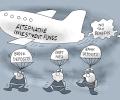
Alternative investment funds (AIFs) - investment vehicles favoured by the affluent - have topped $50 billion (Rs 4.3 trillion) in total investments for the first time during the April-June quarter, according to the latest data from the Securities and Exchange Board of India. The industry's commitments have approached Rs 12 trillion ($140 billion), marking a 40 per cent increase over the past year. The amount raised and deployed stood at Rs 4.74 trillion ($56 billion) and Rs 4.32 trillion ($51 billion), respectively, the data shows.

Tasting success with the relaunch of Sensex derivatives in the onshore market, BSE is preparing for the 'offshore' debut of its 30-share index, which has become synonymous with the domestic markets. Sources in the know said that the India International Exchange (India INX), a subsidiary of BSE, received approval in July from the International Financial Services Centres Authority (IFSCA) to launch Sensex 30 derivatives contracts.

You can also read about the Indira Gandhi Assassination Case, the Parliament Attack Case, the Red Fort Attack Case, the Jessica Lal Murder Case, the Decriminalisation of Homosexuality Case among others.

'There is no irrational exuberance when it comes to mainboard IPOs.' 'Most issues are by good quality businesses.'
 © 2026 Rediff.com - Advertise with us - Disclaimer - Privacy Policy - Sitemap - Feedback - About us - Terms of use - Grievances